

How asking 1 question at signup doubled product sales
Welcome to Day 2 of the 30 Days of Growth.
This is a pop-up newsletter put together by the team at Growth In Reverse. We’ve pulled 30 creators together to help give one short, actionable way you can either grow or improve your email list.
You can view past issues here.
Think about the last newsletter you signed up for. You probably got a generic welcome email, maybe a quick pitch, and then you were dropped into the regular newsletter cadence just like everyone else.
Katelyn Bourgoin thinks that’s a missed opportunity.
And after seeing what she’s done, I have to agree!
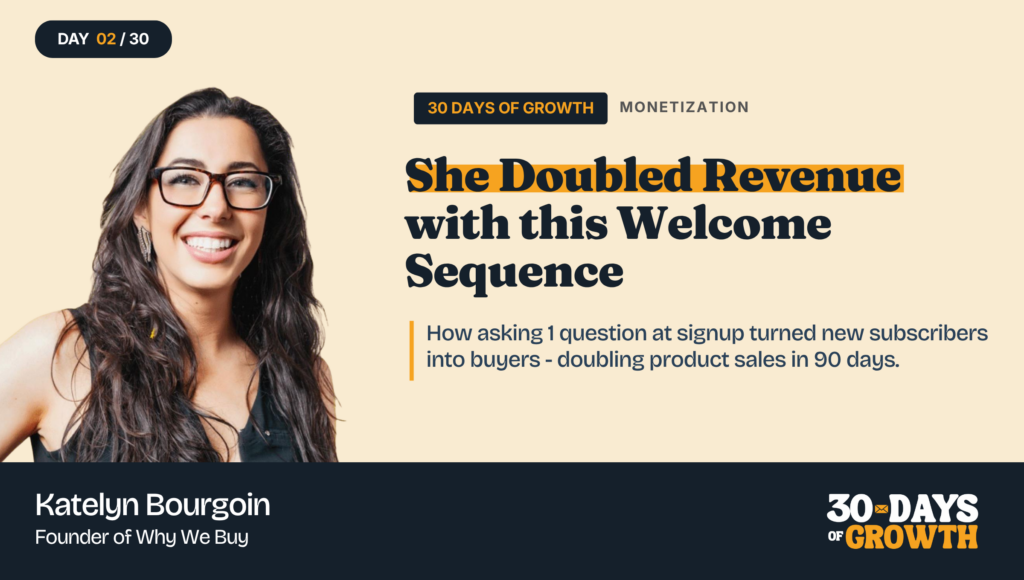
She runs Why We Buy, a newsletter about buyer psychology with about 63,000 subscribers. And she’s on a mission to hit $2 million in revenue while, in her words, “getting lazier.”
The biggest lever so far? A personalized welcome sequence that asks new subscribers what they need help with, then gives them exactly that.
How Katelyn Does It
1. She asks new subscribers about their pain points at signup. When someone joins, they’re asked what they’re struggling with. It’s a quick 1-question survey that helps Katelyn sort people into groups based on what they actually need help with.
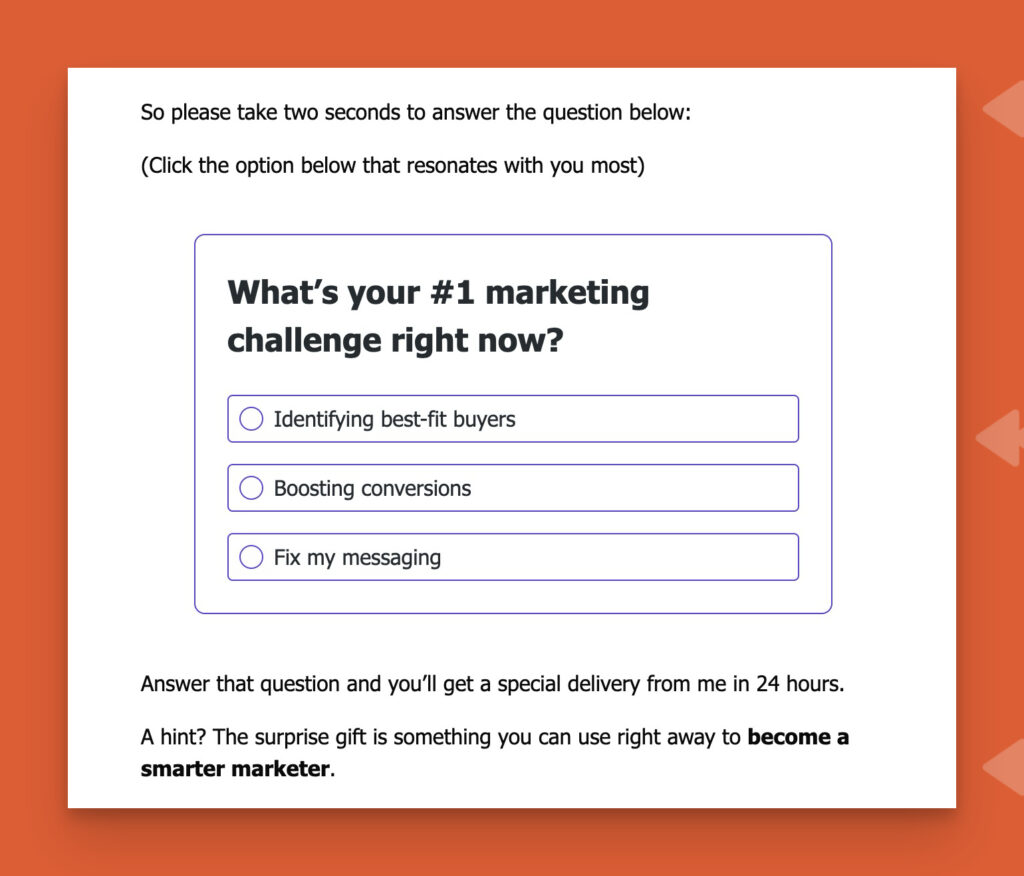
2. She built targeted welcome sequences for each group. Instead of one generic welcome flow, Katelyn created different sequences based on the pain points people shared. Each one is built around a specific problem and leads naturally into the product that solves it.
She compares it to walking into a stranger’s house:
“Imagine you’re greeted with a drink at the door, and there’s this beautiful spread put out for you, and you feel valued. I feel the same way about the welcome sequence for a newsletter.”
– Katelyn Bourgoin
3. The sequences sell without being pushy. Katelyn says she actually hates sales. Her approach is to let the marketing do the selling for her. The welcome sequences softly introduce her products in context, so by the time someone hits a sales page, they already know the brand and they’re already interested.
💰 Are you ready for the real gold?
4. She layers in segmented flash sales. Beyond the welcome sequence, Katelyn split her subscribers into thirds. Each segment sees a flash sale for a different product on a rotating basis, so there’s always an offer running, but no one person feels like they’re being sold to all the time.
New subscribers get routed into the most relevant offer based on what they said at signup. And anyone in an active welcome sequence is excluded from flash sales so the experiences don’t overlap.
Why It Works
She’s meeting people where they are. Someone who just told you their biggest challenge and then gets a sequence addressing it will pay way more attention than someone getting a one-size-fits-all drip.
It builds trust early. Instead of pitching right away, Katelyn creates what she calls a “wow-worthy first impression.” That goodwill carries forward into everything else, whether it’s a product launch, a flash sale, or just her regular newsletter.
Segmented flash sales use real urgency. By limiting deals to a segment of the list, she can use real urgency without burning out her whole audience. And because she’s not blasting sales on social media, her public content stays focused on value.
Results
- Digital product sales up 30% within 3 months of launching personalized sequences 🤯
- Overall digital product sales doubled
- And happier readers who feel like she’s speaking directly to them
How You Can Implement It
1. Add a “pain point” question to your signup flow. Keep it simple, with just one multiple-choice question about what they’re struggling with is enough to start.
2. Build a welcome sequence for each pain point. 3-5 emails that address their specific problem and naturally lead to a relevant product or offer.
3. Exclude people in active welcome sequences from other promotions so the experience doesn’t get messy.
4. Once you’ve got enough subscribers, try segmented flash sales. Split your list into groups, rotate offers, and give each segment a reason to buy now instead of later.
5. Analyze and iterate. See which sequences lead to the most sales and keep improving the ones that aren’t pulling their weight.
Tools
- Kit for email sequences, segmentation, and automation
- A survey at signup – Katelyn uses Kit polls for this. You can also use Tally, or Beehiiv has surveys too
Your welcome sequence is the first real conversation you have with a new subscriber. Katelyn treats it like a first impression worth making, and it’s become the biggest driver of revenue in her business.
See you tomorrow,
Chenell
P.S. You can follow Katelyn on LinkedIn or check out her newsletter at learnwhywebuy.com.