Why deleting a survey plugged a leaky subscriber bucket.
Welcome to Day 9 of the 30 Days of Growth.
This is a pop-up newsletter put together by the team at Growth In Reverse. We’ve pulled 30 creators together to help give one short, actionable way you can either grow or improve your email list.
You can view past issues here.
This series has talked about a bunch of ways to get more subscribers.
People get so focused on seeing that new subscriber count go up that they ignore one of the healthier growth metrics: retention.
Subscriber retention is less sexy but super important for the simple fact that….improving it keeps more subscribers on your list. Simple, right?
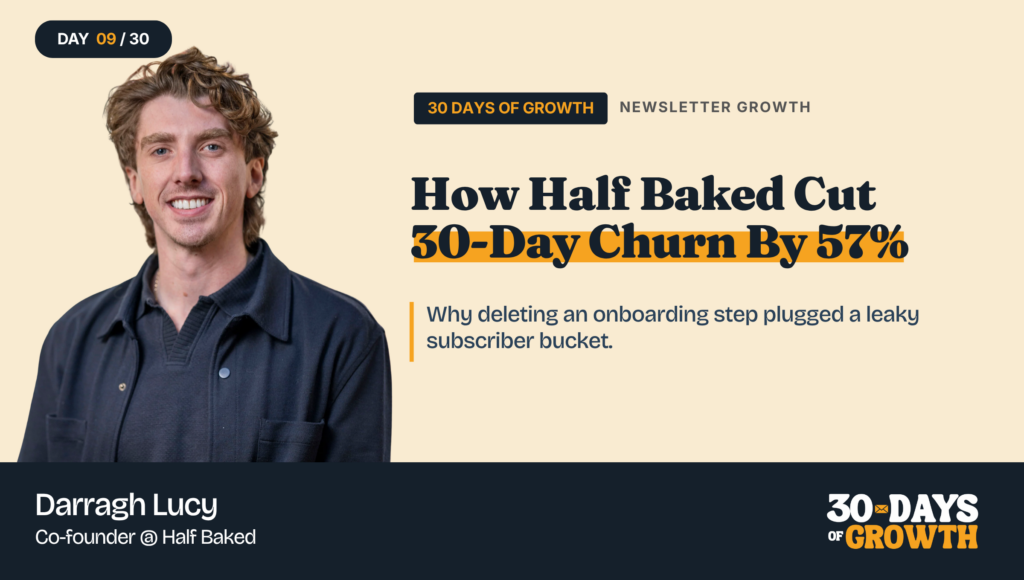
Darragh Lucy is the co-founder of Half Baked, a newsletter about startup ideas. And churn is the metric he’s actively working on right now. In his words, it’s the most underrated growth metric out there.
Here’s what Darragh and the team noticed.
New subscribers were increasingly churning over the first 30 days. And it correlated with Half Baked’s onboarding flow getting longer and longer. More questions during onboarding seemed to lead to more subs leaving within 30 days.
To get to the bottom of it, Darragh and his team ran an experiment. And what they found was a significant drop in churn.
So what did they do to reduce churn?
Everyone wants first party data, but how many pay attention to what all those questions do to your readers?
They deleted the onboarding form entirely. The result?
30-day churn on that cohort dropped from around 7% to around 3% – they cut churn in half (57% to be exact).
How Half Baked Did It
1. They removed every question from the paid-subscriber signup flow. They scrapped the entire onboarding survey for subscribers acquired via Meta ads. Yes they lose some valuable first-party data, but keeping an engaged subscriber is more important.
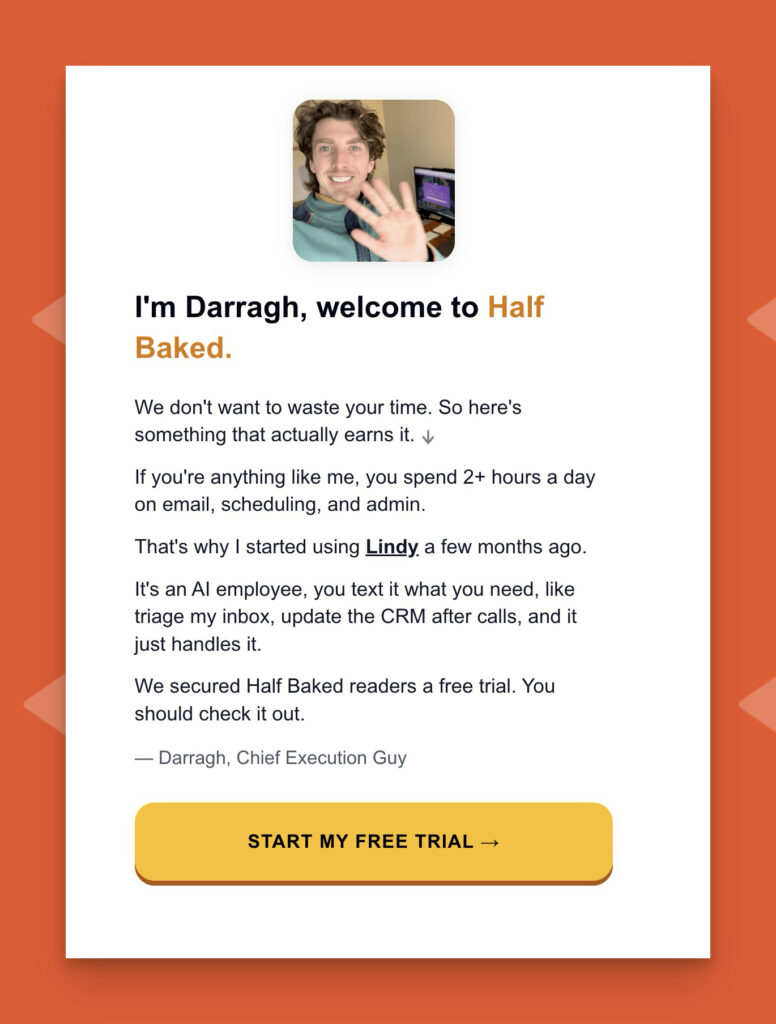
2. New subscribers are redirected to a thank you page. Now instead of the onboarding survey, new subscribers go directly to a thank you page that confirms the signup and gently recommends a featured product.
3. He paid extra attention to the paid acquisition cohort. Half Baked uses Meta ads for paid growth. But those subscribers are “colder” than an organic subscriber. So adding extra steps in the onboarding flow is risky. They’re more likely to lose interest before they’re truly subscribed.
4. He let the newsletter itself do the segmenting over time. Instead of asking people to describe themselves on Day 1, Darragh watches what they engage with across the first few editions. Their behavior actually gives Half Baked some great insights.
5. Darragh measures 30-day churn separately between paid vs. organic channels. Acquired subscribers behave differently from organic, so a single average would have hidden the win.
Why It Works
Cold traffic from Meta ads is still, well… cold. Someone interrupted from their feed is a few seconds away from closing the tab anyway. A short onboarding survey is more likely to push them over the edge and never come back.
The onboarding form data wasn’t helpful. Behavioral signals (clicks, replies, opens) tend to do the segmentation job better than self-reported survey questions.
A quick post-signup experience gets the welcome email out faster. The all-important welcome email lands while the person still remembers why they subscribed – and that has downstream effects on every email after that.
Results
- 30-day churn on the Meta ads cohort dropped from ~7% to ~3% – that’s an extra 40 additional subscribers sticking around for every 1,000 acquired
- Shorter onboarding correlates with lower 30-day churn across the board which has positive effects on subscriber LTV
The leaky bucket leaks slower, which compounds over every month of growth.
How You Can Implement It
Note: If you have an onboarding survey, consider all these steps! But if you don’t, it’s still a great practice to review and implement Steps 1, 4, 5, and 6.
Step 1: Pull your 30-day churn number, broken out by acquisition source if you can. Paid, organic, and referral (i.e. recommendations) cohorts almost always behave differently.
Step 2: Count every question after the email field on your signup flow. Be honest about which ones are actually wired up to automations you use.
Step 3: Cut every question that doesn’t trigger a specific segment or sequence you’re running today. If it just “might be useful someday,” it’s tax on a cold subscriber.
Step 4: Redirect new signups directly to a thank you page. Confirm the signup on that page and remind them to check their inbox for their first email from you.
Step 5: Add “self-selecting” segmentation into the first 2-3 editions. You can do that by tagging people based on links they click, or drop in 1 “low friction” question inside the welcome sequence.
Step 6: Check your churn data after 30 days and compare. Watch the paid cohort especially.
Tools
- Your ESP
- A thank you page
- UTMs or your ESP’s source tracking (so paid and organic show up in churn reports separately)
Retention is a growth strategy! A signup form that costs you 4 percentage points of churn could be more expensive than your ad budget.
See you tomorrow,
Chenell
P.S. You can subscribe to Half Baked at gethalfbaked.com.