

Thomas Shields launched The Dink, a pickleball newsletter, in late 2020.
By April 2021, he’d grown it to 9,800 subscribers in just six months—no small feat.
Then he launched a referral program that I cannot stop thinking about.
On launch day alone, referrals drove 94.8% of new subscribers. They effectively doubled their daily sign-up rate overnight.

Today, The Dink has hundreds of thousands of email subscribers and 2 million followers across social media. It’s become a household name in pickleball.
And when you look at their growth timeline, you can pinpoint the exact moment everything accelerated:
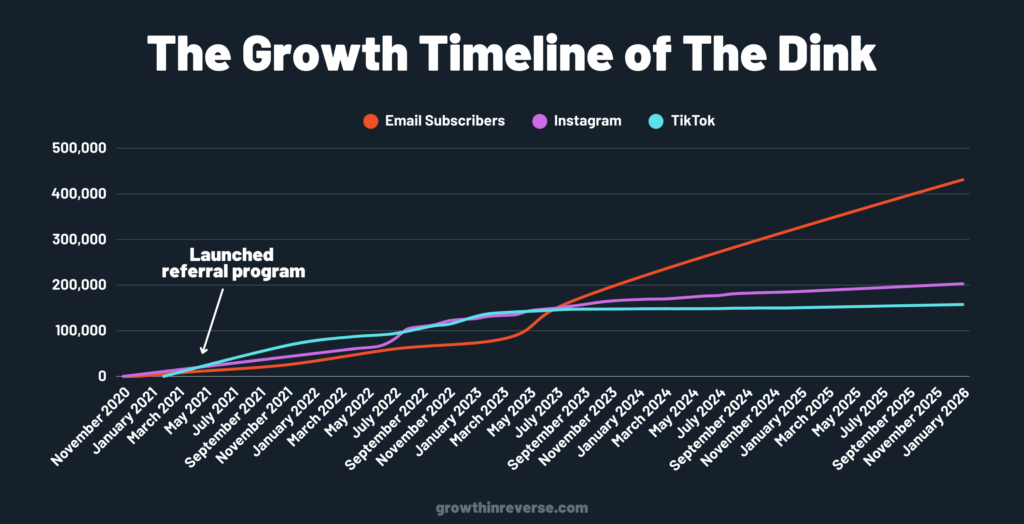
Referral programs typically drive incremental gains. They’re not “sexy” like paid ads or viral videos.
But this is one of the most exceptional newsletter referral programs I’ve ever seen.
On launch day, Thomas posted this, a sign of good things to come:
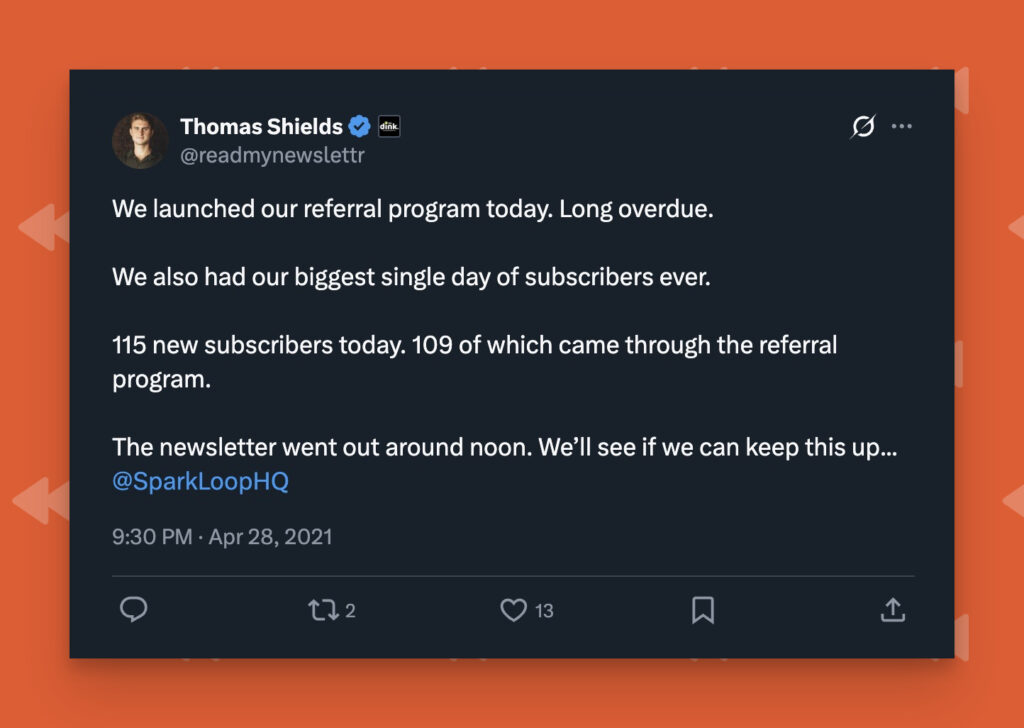
From my math, they were doing around 50 subs per day on average up to that point. The referral program effectively doubled their subscribers on day one.
So what does this program look like, how did it help their growth, and why am I so freaking excited to share this with you?
Let’s get into it.
The Dink’s Referral Program
Typically, when you think of a referral program for a newsletter, you think of one where brands give away a sticker or send you a free information product (course, book, pdf, etc.).
But this referral program puts those to shame.
Let’s think about this a bit and reverse engineer what an awesome referral program would look like for The Dink.
What would a pickleball enthusiast/player want from a pickleball newsletter?
Pickleballs? so they can play more…pickleball
Paddles? Kind of a requirement to play the game.
Better shoes? Your Crocs won’t cut it for a game of pickleball.
These would be functional, extremely useful, and something you’d happily refer a few friends to get for free? And it would be cool if the brands supplied these prizes without the Dink having to pay for them, right?
Bingo, bango. That’s exactly what Thomas created.
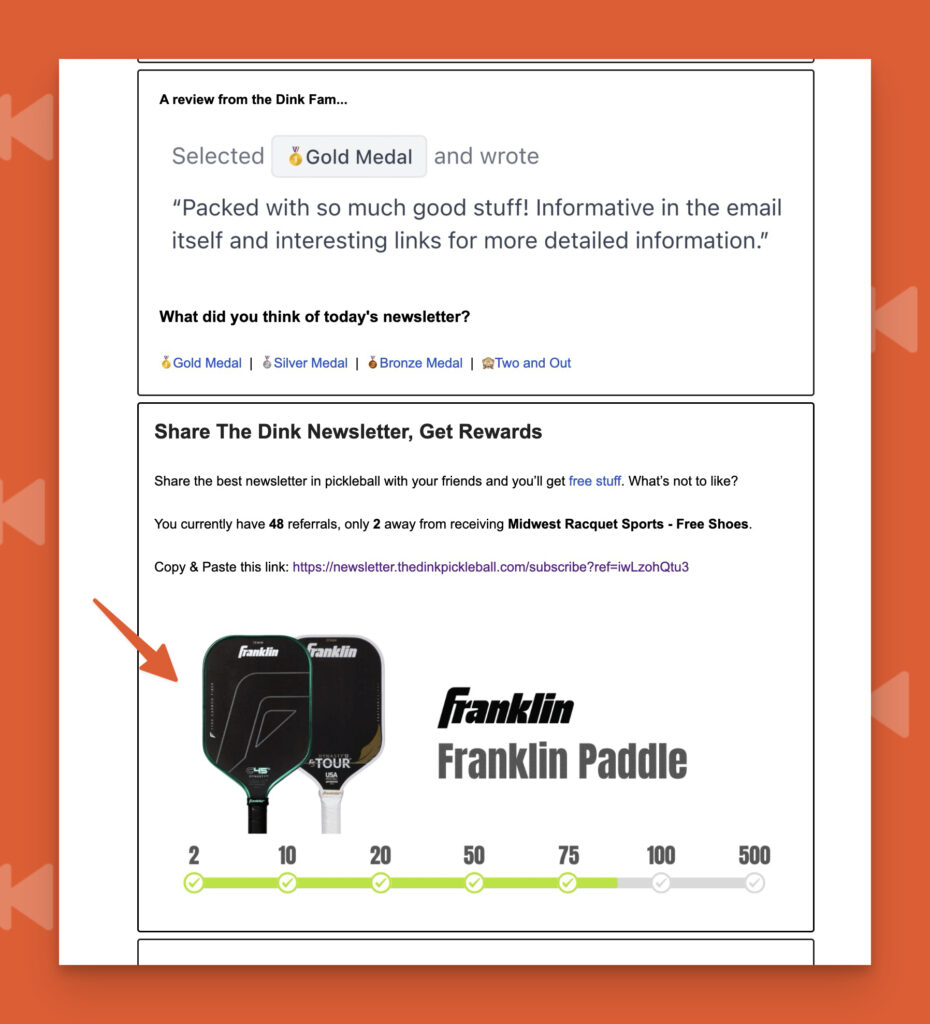
The Dink worked with brands in the pickleball space to get them to offer their products to his readers…for free.
You heard that right:
The brand supplies the products.
The Dink gets the readers.
And the readers get free stuff they’d probably buy anyway.
Talk about this being insanely valuable for all parties.
The Rewards Tiers
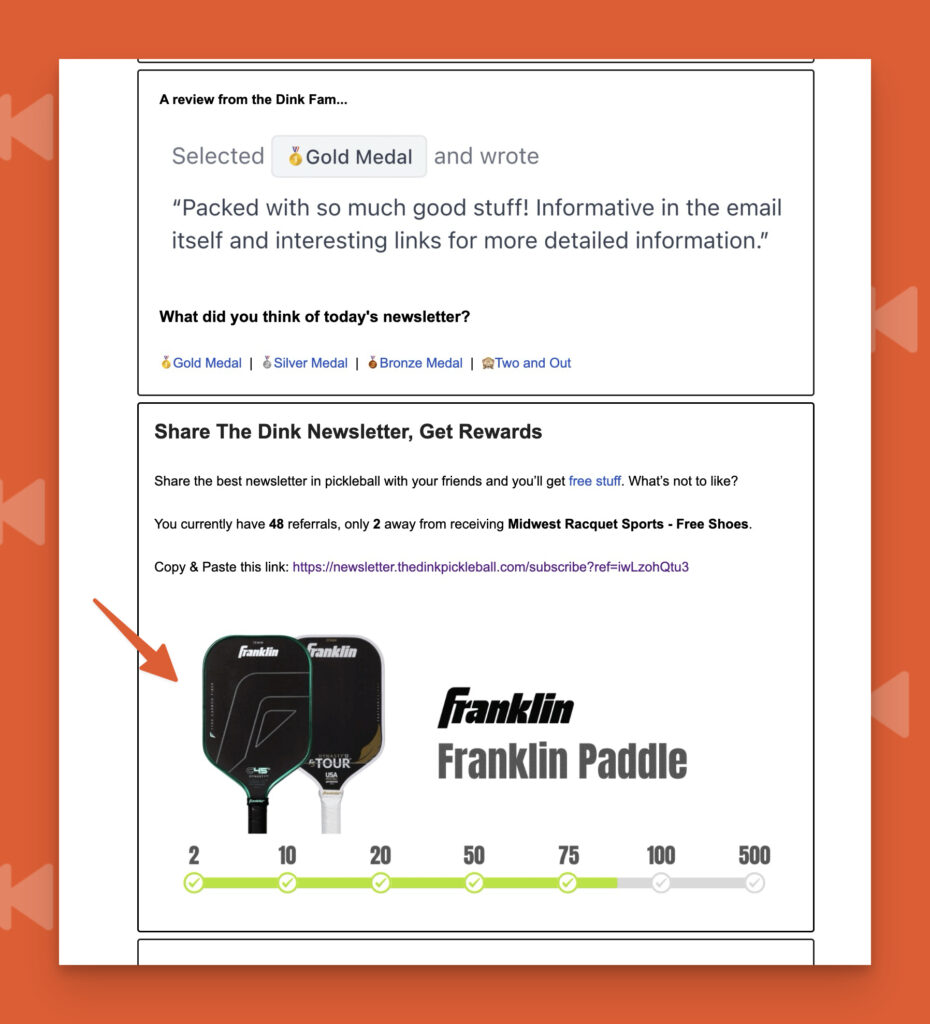
Here is a quick breakdown of their current rewards tiers:
- 2 referrals – Dink Pickleball Stickers
- 10 referrals – $25 Selkirk gift card
- 20 referrals – Dura Fast-40 balls
- 50 referrals – Midwest Pickleball Shoes
- 75 referrals – Franklin Paddle
- 100 referrals – Selkirk Paddle
- 500 referrals – Paddle for Life
They promote this at the bottom of every newsletter edition they send with this beautiful GIF.

Of course, when I saw this, I had to try it out.
When I originally wrote a deep dive about The Dink, I included my referral link and ended up hitting the 20 referrals tier. (Thanks guys!)
And yes, they sent me free pickleballs.
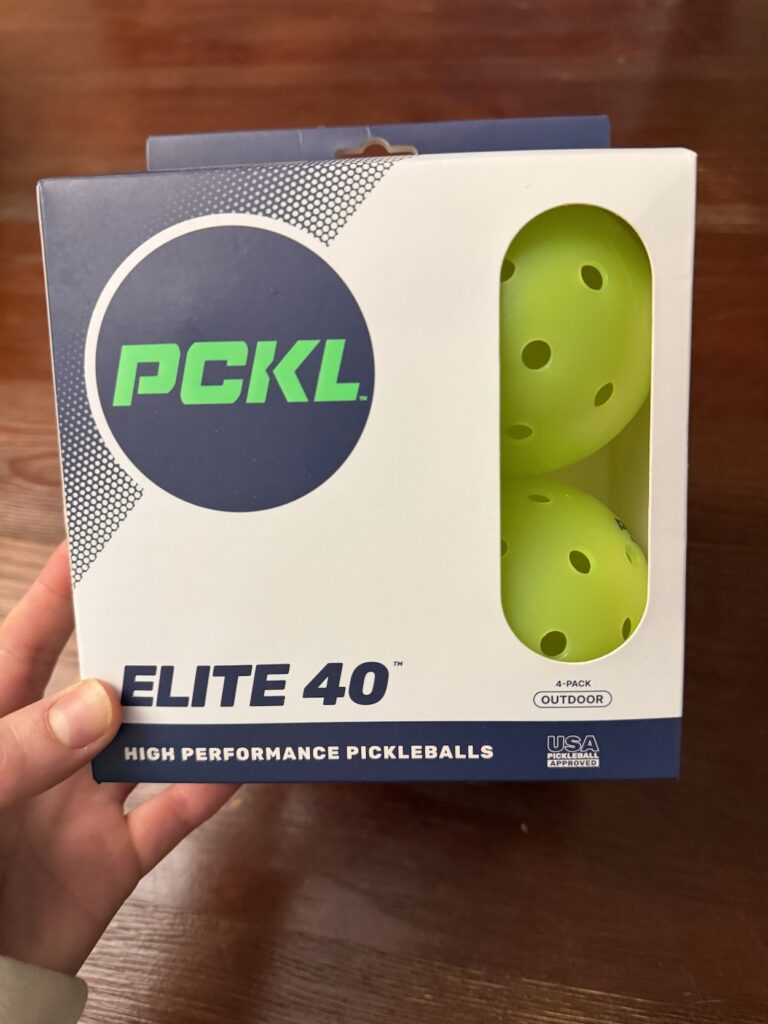
How cool is that?! And I don’t even play pickleball, yet.
A physical gift from a digital newsletter.
I was, and am, a big fan of this.
There is something about breaking that physical barrier with a brand that just makes it way more fun, engaging, and memorable.
The Back-End
Now, this might seem a little hard to pull off. How do you keep track of who refers people, and coordinate with the brand to send them the right gift?
Filter for Quality
When I shared my referral link, I hit the 20 pretty quickly. Apparently, there are a lot of pickleballers on my email list. Or you’re just as curious as I am. 🙂
But they don’t just count every email that signs up, they require every referral to confirm their opt-in.
When you sign up via someone’s referral link, you get sent an email that asks you to confirm your subscription:
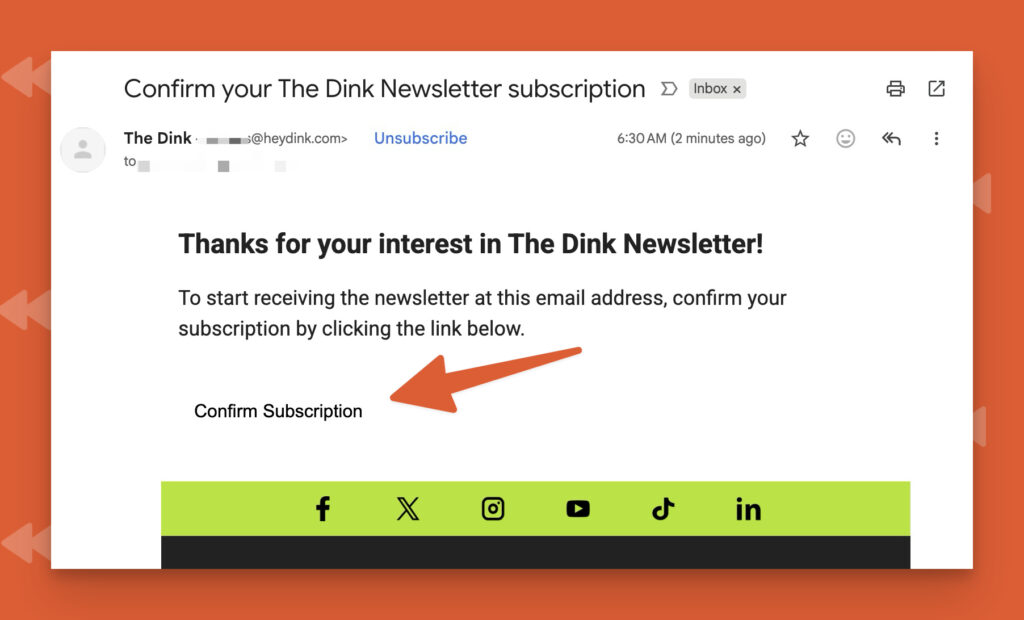
If you don’t click that link, you don’t count towards the referrers’ overall number.
Here is what that looked like when I just tested this out.
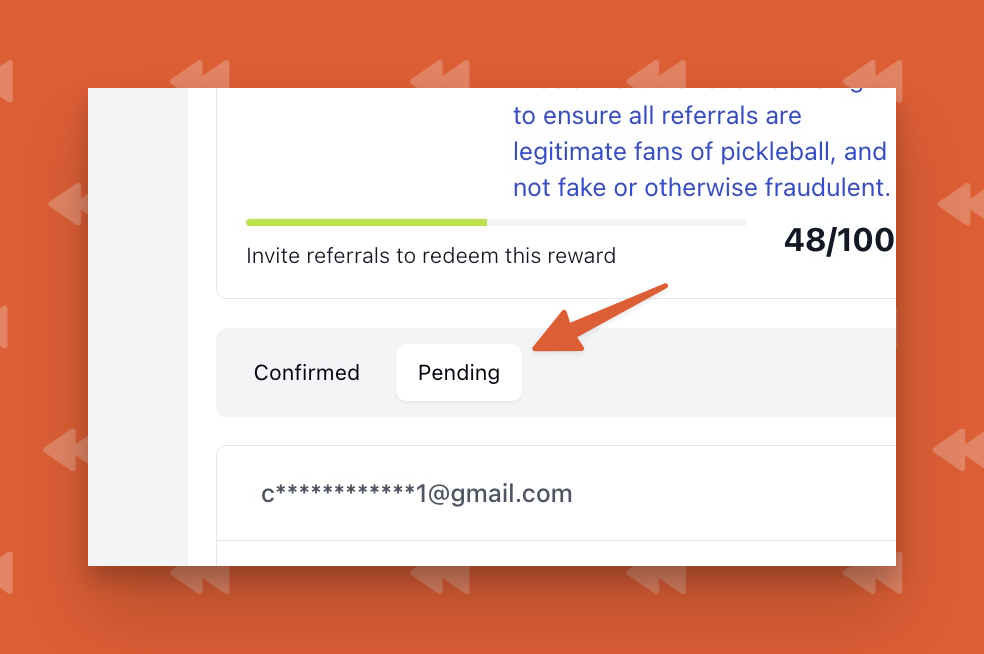
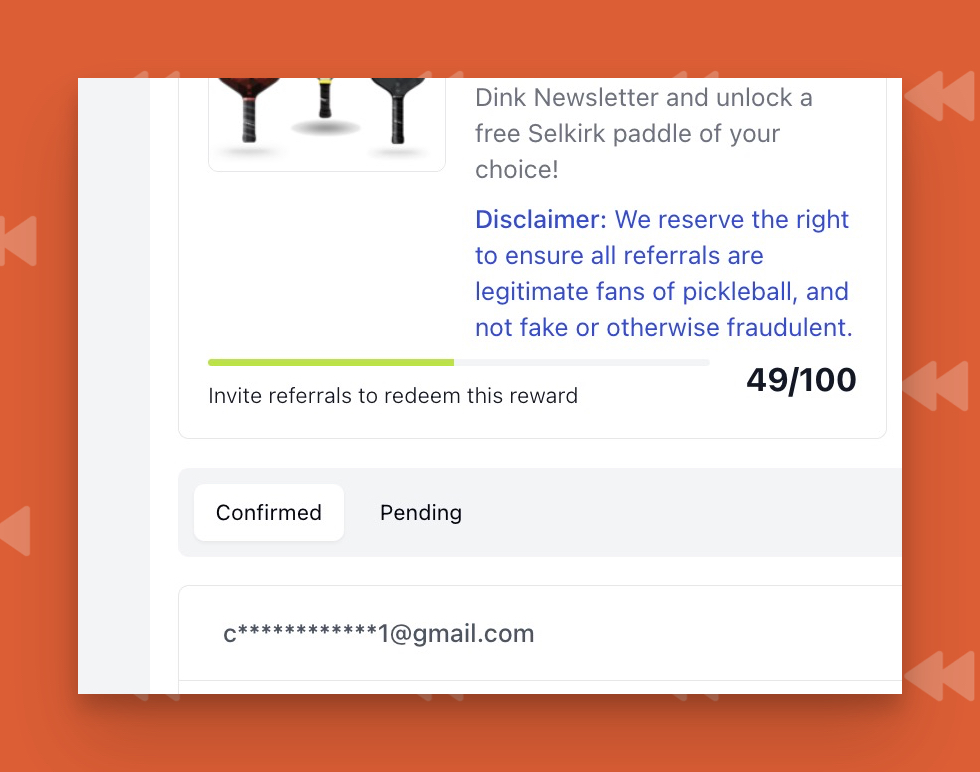
After I clicked the link to confirm, a few minutes later, my email address showed up on the “confirmed” list.
Milestone Emails
At each milestone you hit (2 referrals, 10 referrals, etc.) they send you a custom email with next steps.
These emails only get sent once you have that many “confirmed” referrals.
Here is the one I got after just one referral, which if you recall from the list above, doesn’t actually get you anything:
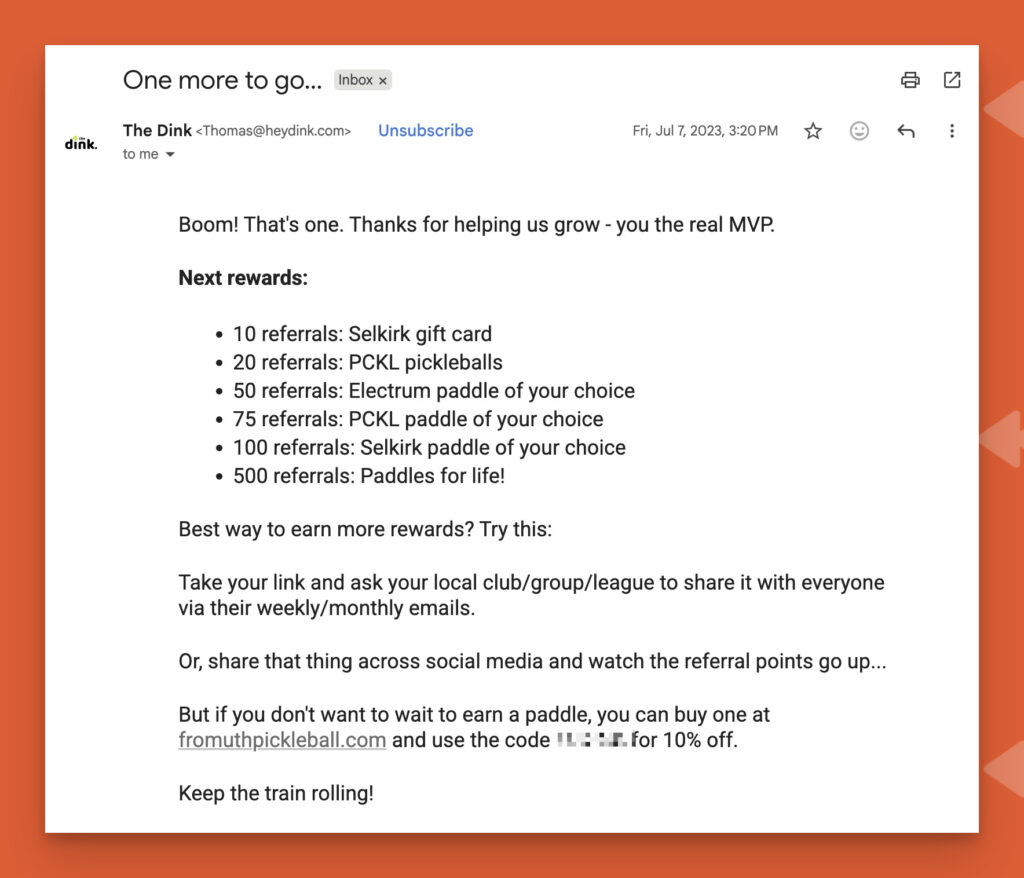
I love this, as they’re helping you see progress and reminding you that you’re “only one referral away.”
Plus, they sent you to one of their brand partners with a discount code. Attribution anyone?
Anyway, at each subsequent point, you get an email with next steps.
Here is the one after hitting 20 referrals:
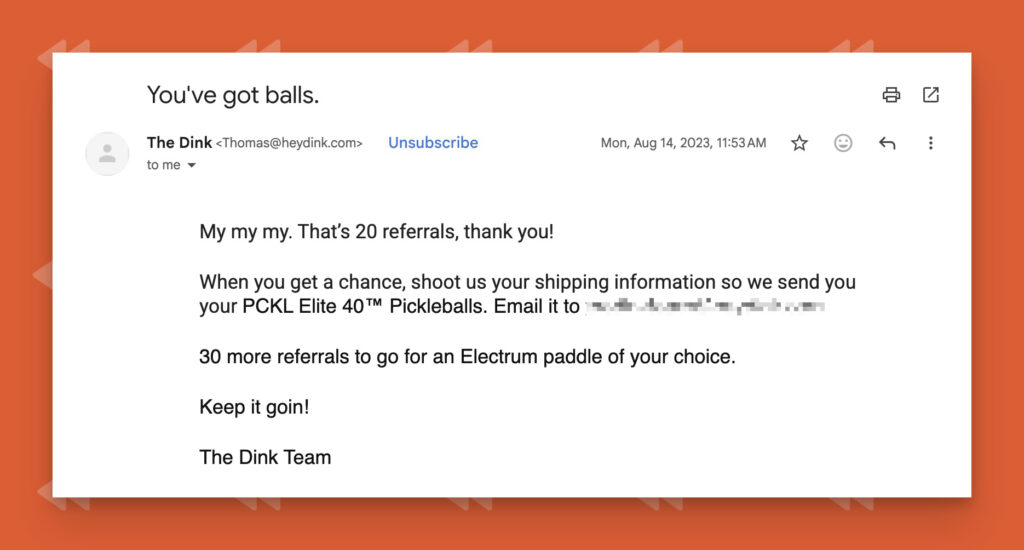
So they ask you for your address in this email, ideally making the delivery of these prizes simple and easy.
But of course I missed this email – whoops. So they had to follow up personally to track me down and send me my free pickleballs. 🫣
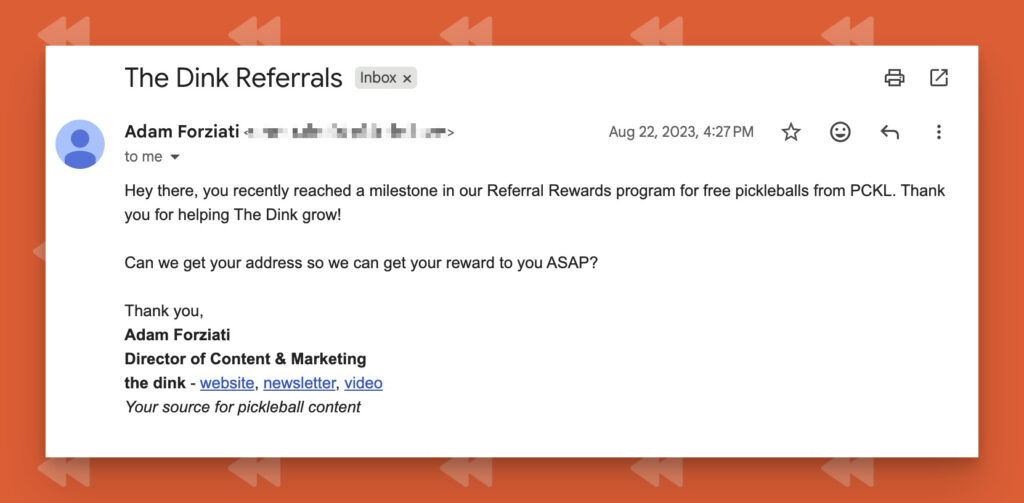
This is also a great reminder that you don’t need a complex system to get started with this strategy.
Ask people for their address. If they don’t see that email, personally reach out.
This was also back in 2023, so I’d imagine maybe it got a little more robust since then. Or maybe not.
We can find out, but I need to hit the next tier to let you know.
I’m 2 referrals away from free pickleball shoes. Can you help me get there so I can update you on what this process looks like now? 🙂
You can sign up for their newsletter here.
If I get to 75, I’ll have the pickleballs, shoes, and paddle to get started. And I’ll for sure get some pics for you.
Why Would Brands Do This?
When I first saw this, I was thinking: “Why in the world would a brand give their own stuff away for free to this newsletter??”
It doesn’t really make any sense, does it?
And then I realized something.
This is a bada*s implementation of a sponsorship. They get their products into the hands of more pickleball fans AND brand awareness at the bottom of every single email.
And it’s native brand awareness. Not some typical ad or sponsorship placement, so it feels much more natural.
Can you imagine having your brand promoted in every single email of a top newsletter in your niche?
But here’s the genius part I didn’t see at first.
Influential people promoting them
Let’s think about this for a second. The tiers for these prizes are kind of high for the average person.
75 or 100 referrals for a pickleball paddle. 50 for shoes. 25 for pickleballs.
The people who would be able to easily reach that number?
- Pickleball influencers and athletes
- Someone who runs a pickleball league
- The owner of a pickleball Facebook group
- A superconnector who knows everyone in the neighborhood that plays pickleball.
These are people with audiences, or at the very least, the attention of lots of people. And likely people who create content or share fun things happening with that audience.
How easy would it be for them to post, “Hey, I got a free Franklin paddle from the Dink!”
Franklin gets awareness. Selkirk gets awareness.
The Dink has more people trying to refer friends to get their own paddle.
One social post or mention in an email is worth way more than the brand paid to give away a free paddle.
The Referral Program Flywheel
There’s a beautiful flywheel in here, it just might not be as obvious.
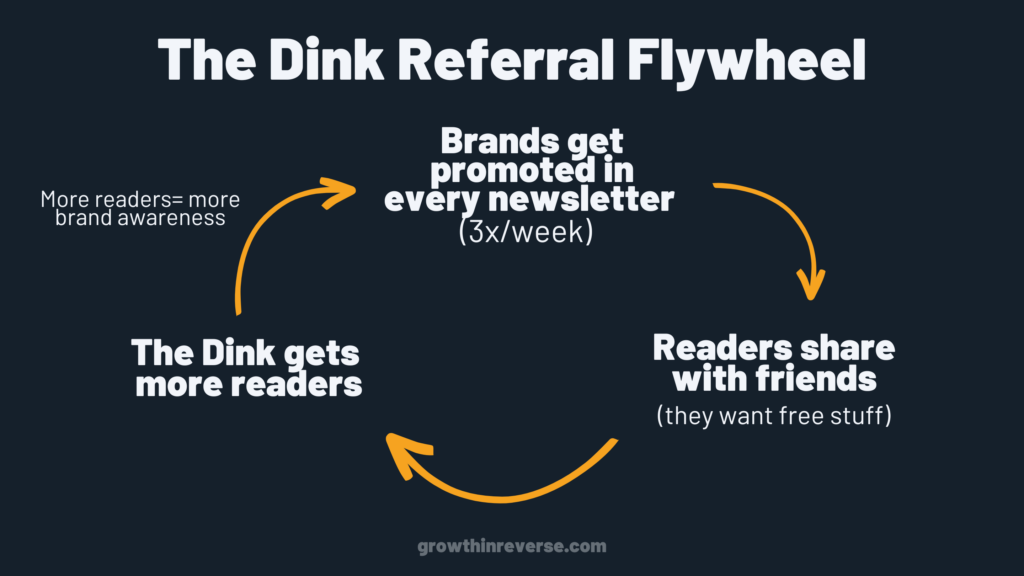
The Dink goes out 3 times per week. In each email, these brands are getting shown to readers.
Readers share The Dink with friends. Some will promote it on social media or with their own pickleball leagues, teams, friend groups, etc.
The Dink gets more emails and more pickleball enthusiasts or pros on their email list.
These brands get more high-quality reach.
And the offshoot of this is that a percentage of people will share their physical prizes on social media. Just adding to the brand awareness for both The Dink and these brands.
You might argue that it’s buried at the bottom of the emails, and they won’t get as much reach. Fine. But do you know who reads to the end of every email? Superfans.
They are much more likely to be the ones referring anyway.
All I can say is it’s clearly beneficial to them, or these brands wouldn’t have continued with this strategy for the last 4 years.
🚂 Replication Station
How can you replicate this for your own newsletter?
First, I’ll say it might not be for everyone. However, this feels like a killer way to regularly engage your fans and get brand partnerships as well.
1. Create Your Dream Brand List
Make a list of 5-10 brands you think would be a great fit for something like this.
Physical stuff is top-tier if your niche warrants it. But if not, software can work as well.
For me, it would be brands like:
- Kit
- Beehiiv
- RightMessage
- Notion
- Senja
- Tella
Start researching these brands and see how they’ve promoted themselves and aligned with creators in the past. What kinds of things do they care about?
Then come up with ideas for what they could give away.
You want to make this easy for the brand to say yes, but also it needs to be super compelling.
A one-month free trial to their platform is cool…but for a tool like an email service provider, there is a huge switching cost. It’s not super easy to go from Kit to Beehiiv or vice versa.
I have automations, forms, tags, etc. setup that would make it a pain to move.
So a month wouldn’t be worth it for me. I wouldn’t refer people unless I was already using the tool.
A free year? Much better.
A lifetime subscription? I would fight and claw my way to 500 referrals if that were the case.
Which is probably exactly why The Dink partnered to offer a Paddle for Life option. Few people (if any) will hit that, but in the pursuit of it they’ll be talking about your brand everywhere.
2. Figure out who is in your audience
A brand is going to want to know what they’re getting from this, and many of them might not be as cool with the “awareness” play out of the box. But if you show them that 30% of your audience already uses your tool, and a good chunk of the rest are their ideal customer, this makes your pitch much stronger.
Survey your audience, and get more than just demographics. Enrich your list. And you’ll come into negotiations much more prepared than just guessing.
There are many other steps you could take to prep yourself for this, but at the end of the day you need to start somewhere.
3. Reach out
Find the most relevant brand contact. Tag their founder on social media.
Follow up (within reason), and make sure you give them enough context to show them why this is worth it.
4. Promote This Everywhere
Not only does this GIF widget thing live at the bottom of every email, but they share this all over the place.
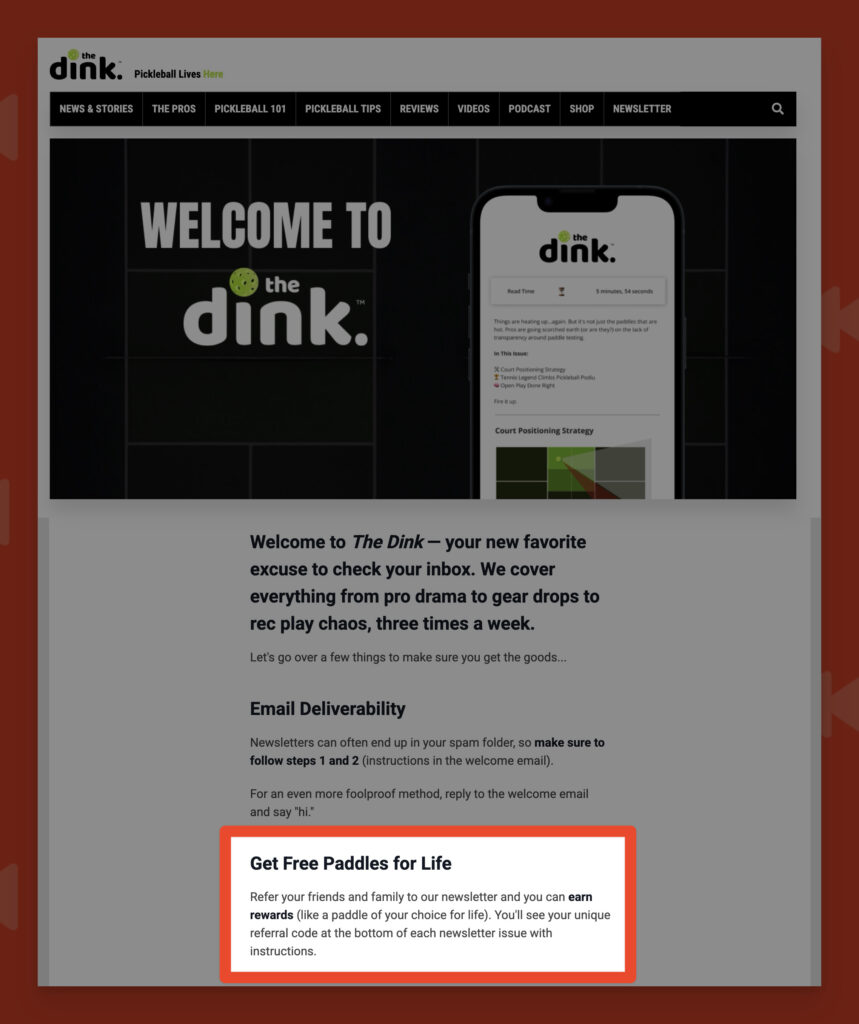
The Dink’s Thank You page
Once you subscribe to The Dink’s newsletter, they immediately tell you about their referral program and how you can get free paddles for life.
I’ll be the first to say, software isn’t as compelling as a physical thing people will use all the time. However, I still think the outcome is quite strong.
There is a reason brands give out merch at conferences. If you can get someone to use something regularly that has your logo on it, you’ll stay top of mind.
That’s exactly what these brands are getting with this strategy, but without the boring transactional nature of a rep at a booth desperately trying to give away free pens or tote bags.
Referral programs aren’t going to double your list overnight. But those incremental gains you get day in and day out will add up. And when you set up the program in a way that makes it a win for you, for the brand, and most importantly, for your readers, that incremental growth will come much faster.
Have you come across other killer referral programs?