There’s a faster path to newsletter growth than building your audience from zero. Find someone who already has the audience you want, and figure out how to be useful to them and their audience.
That’s the simple version of the strategy. Here are 4 creators who used that in completely different ways.
1. 700 subscribers from 6 guest posts
Guest posting gets talked about constantly, but rarely with actual data behind it.
But Ciler Demiralp shared the numbers with me recently and I’m here for this one.
She spent time finding newsletters with audiences adjacent to hers. Then she tailored content specifically for each one, got featured in 6 publications, and drove 700 new subscribers. That’s around 120 per post.
The best part was that she wasn’t writing from scratch each time, she repurposed data and posts she’d already put together, which made the lift way smaller than it sounds.
Some of those subscribers turned into long-term collaborators too. That’s not a data point you can put in a spreadsheet, but it’s impactful.
Bonus note: if you’re on Substack, Kit, or Beehiiv, ask the person you’re writing for to add you to their recommendations. A recommendation from someone driving consistent signups can be worth more than the guest post itself.
2. 10,769 Subscribers from Trading Audiences
Avi runs a newsletter called Creator Logic, about the business of being a creator. Instead of paying for ad placements, he traded content to get in front of other brands’ audiences.
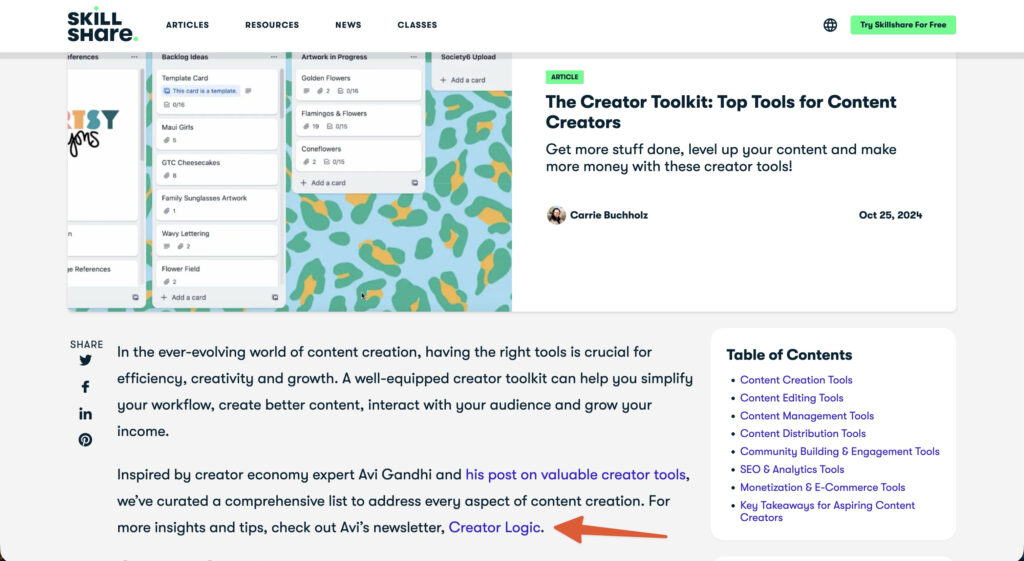
The clearest example is his Skillshare partnership. He interviewed one of their creators, Skillshare promoted the event, then handed him the RSVP list. He uploaded it, invited people to stay subscribed, and that single webinar drove close to 500 subscribers.
This also ended up getting him featured in at least one of their posts on the site:
His biggest single swap was with Influencers Club, where he promoted their platform on LinkedIn in exchange for them promoting his newsletter. That one relationship alone drove a big chunk of his overall growth.
The underlying logic (ha, get it?) is pretty simple. Your readers are already using tools and platforms. Those tools have audiences.
Find the ones your target reader is on, figure out how you can help them create content, and ask for audience access in exchange.
An interview is a pretty low lift. You prep, go live, and the partner does the promoting. Although, it can be a little nerve wracking 🙂
3. Getting 1,100+ subscribers from 1 Virtual Event
Amy runs The Riveter and didn’t want to travel for speaking gigs, so she built a virtual circuit instead.
She’d put together a multi-part content series, then bring in brands or creators with relevant audiences to co-host. Both parties promoted to their own lists, Amy handled the setup, and one event alone brought in over 1,100 subscribers.
She also offered event-specific freebies to live attendees, which created real urgency to show up rather than just sign up for the replay. The replay was still available, but the freebie wasn’t.
Then she repurposed everything. Newsletter issues, social clips, roundup emails. One event became weeks of content, which is the part most people skip entirely.
The other thing worth doing: make it dead simple for your partners to keep sharing after the event.
Write the post copy for them, create the clip, hand them something ready to post. If they have to go back, rewatch, pull quotes, and write a caption themselves, most of them won’t.
4. Turning Cross Promos Into a System
Amanda took a more deliberate approach to cross-promotions than most people do.
She seeded her list with some paid growth upfront (SparkLoop, Facebook ads) to get to a size where partners would actually want to collaborate. Then she built a consistent system, booking a set number of cross-promos each month and sometimes swapping a sponsor slot for a partnership instead of taking paid revenue.
The thing that made it work was repetition. She wasn’t treating these as one-offs. She’d go back to partnerships that performed well and run them again 6 months later.
Substack, Kit, and Beehive all have built-in discovery networks now. You can search by topic and niche and find potential partners in a few minutes. Put them in a spreadsheet, schedule the outreach, and don’t let it get lost because you kept it in your head.
The Best Collaboration I’ve Done
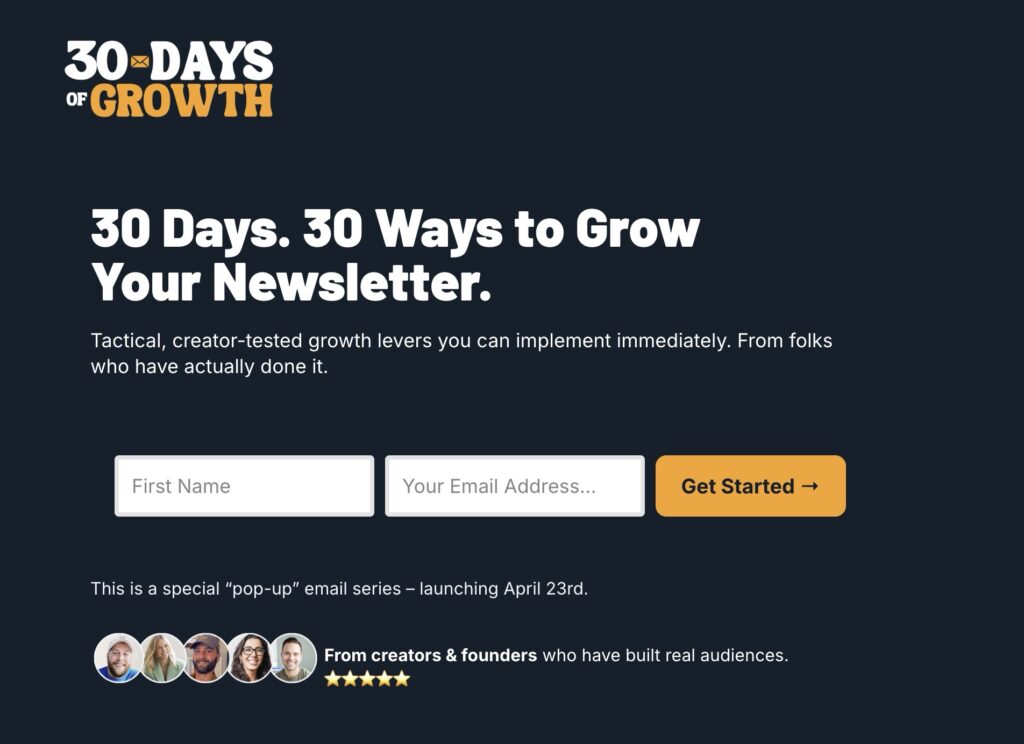
Everything above came from a pop-up newsletter I ran in 2025 called 30 Days of Growth.
The concept was a daily newsletter where 30 creators each shared 1 growth tactic over 30 days. They gave me the tactic and results, then I wrote the pieces. They promoted the newsletter once to their audience in exchange for being featured.
29 creators said yes. About 3,700 people signed up, and around 1,700 were totally new to my list.
What made it work was that it was an event with a start date and an end date. People wanted in before it was over, and that urgency is a completely different dynamic than a standard newsletter signup.
Spoiler alert: I’m doing this again in April. You can sign up here to join the waitlist.
The subscriber quality was also noticeably different. CEOs and operators I’d love to have on my list were signing up all over the place. It was awesome.
And now I have 30 case studies I can keep resharing. All 4 examples above came from that newsletter, too.
Collaborations Work
All of these strategies are the same thing done slightly differently. Find people with audiences that overlap with yours, create something worth sharing, and make it easy for both sides to win.
Write the piece. Do the interview. Run the series.
The creators who grow consistently are the ones who make this a system, not a once-a-quarter thought.