How sharing a rough draft with your email list builds insane loyalty among subscribers
Welcome to Day 22 of the 30 Days of Growth.
This is a pop-up newsletter put together by Chenell from Growth In Reverse. I’ve pulled 30 creators together to help give one short, actionable way you can either grow or improve your email list.
You can view all past issues of the 30 Days of Growth here.
Have you ever sent a newsletter and wondered if anyone actually cared about what you wrote?
Justin Jackson runs Transistor (a podcast hosting platform) and has been building in public for over a decade.
He’s got a loyal audience. But even with a loyal audience, there’s always this gap between “people open my emails” and “people are genuinely invested in what I’m making.”
Justin found a way to close that gap. And it’s stupidly simple.
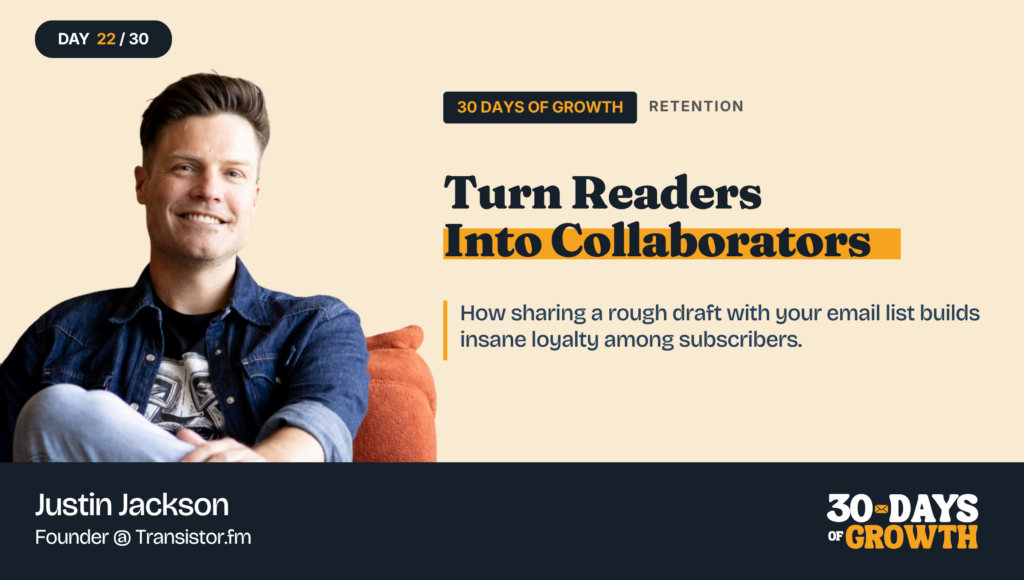
He emailed his list and said: “I’m heading out on a trip. Before I leave, I want to send you a couple things. The first one is a draft I’m working on. I want you to read it in its current form and give me feedback.”
Then he linked to a Google Doc of the article.
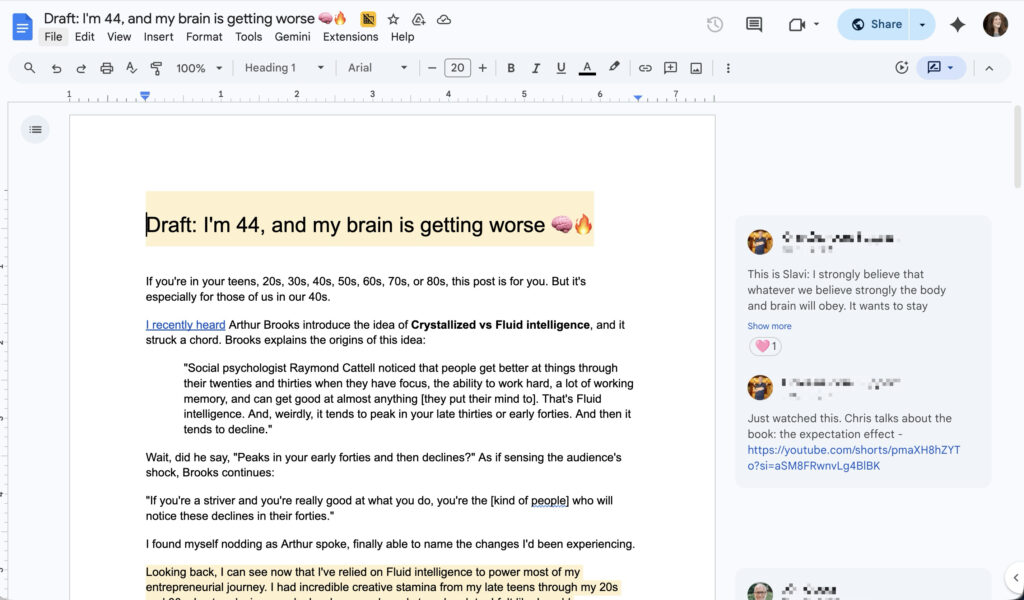
What happened next is the part that got me. People showed up. They read the draft, left comments, replied to each other, collaborated in real time. The doc turned into a living conversation.
How Justin Did It
He picked a piece he was genuinely working through (not something polished and ready to publish). The draft was called “I’m 44, my brain’s getting worse,” which is the kind of honest, relatable topic his audience connects with. Since he’s been writing online for so long, a lot of his readers are probably around the same age and thinking about the same stuff.
He sent it as a simple email to his list. No fancy landing page, no gated content. Just “here’s a Google Doc, go read it, tell me what you think.” The friction was basically zero because people already know how to use Google Docs.
He got feedback he actually implemented in the final piece. Someone would say “hey, this reminded me of this book” or “I hadn’t considered that angle.” Justin got feedback he could include in the final version, and readers got to feel like they shaped the piece.
He could also see exactly who was engaging. Names and pictures are right there in the doc. When he published the final version, he could screenshot a great comment and share it on social, or tag the person who made him rethink a section. That kind of public credit is hard to replicate with a standard newsletter.
Why It Works
People want to help creators they follow, they just rarely get the chance. When you say “here’s something I’m working on, what do you think?”, you’re handing them an invitation that feels personal. And people who feel personally invested in a piece of content are way more likely to share it when it goes live.
There’s a shift that happens when someone comments on your draft. They stop being a passive reader and start feeling like a collaborator. That’s a different level of buy-in than just opening an email and skimming it. They’ll tell their friends about it (probably without you even asking).
The format also gives you something you can’t get from open rates or click rates: real, qualitative feedback on what resonates. You’re basically getting free editorial input from the exact people you’re writing for.
Results
The payoff here is relational, not transactional. I don’t have any specific numbers, but this is one you can just feel the impact of. It’s different, it stands out, and he’s building a community with his readers.
- Real-time qualitative feedback from your most engaged readers (the kind of input that makes the final piece sharper)
- A pool of collaborators who feel ownership over the content and share it organically when it publishes
- Names and faces of your most invested subscribers (useful for social proof, tagging on social, and knowing who your true fans are)
How You Can Implement It
Step 1: Pick a draft you’re genuinely working on. Something unfinished and a little rough. The vulnerability is part of what makes people want to engage.
Step 2: Drop it in a Google Doc with comments enabled. Keep the sharing settings open so anyone with the link can comment.
Step 3: Send a short email to your list. Tell them what you’re working on and ask for their honest feedback. Keep it casual (something like “I’m noodling on this, would love your thoughts”).
Step 4: Watch the comments come in. Reply to every one, and let people see that you’re actually reading what they wrote.
Step 5: When you publish the final version, give credit. Screenshot a great comment, tag someone on social media, or mention in the piece that your readers helped shape it. That public recognition is what keeps people coming back.
Step 6: Repeat every few months. Even once a quarter keeps the collaborative energy alive.
Tools
- Google Docs (free, everyone knows how to use it)
- Your ESP to send the email with the doc link
- Social media for tagging and crediting contributors after publishing
Your subscribers probably want to help you, they just need an invitation. Justin gave them one with a Google Doc and a simple ask, and his readers showed up like collaborators, not spectators.
The people who comment on your draft today are the ones sharing your work later on.
You can follow Justin’s work over at Transistor, or check out his writing at justinjackson.ca.
See you tomorrow,
Chenell
P.S. If you enjoyed this, I pulled this idea right out of my Growth Vault – where you can get access to a growing video library of growth and retention ideas for your newsletters.
When you join, you also get the Subscriber Onboarding course where I walk you step-by-step through creating a great onboarding experience for your readers with live examples and walkthroughs.