How a Bingo card and a trusted partner brought in 3,000 new subscribers
Welcome to Day 17 of the 30 Days of Growth.
This is a pop-up newsletter put together by the team at Growth In Reverse. We’ve pulled 30 creators together to help give one short, actionable way you can either grow or improve your email list.
You can view past issues here.
Collaborations can be a powerful way to grow your newsletter.
But when you combine a collaboration with out-of-the-box thinking, you can really strike gold.
Sean Devlin runs All Healthy, a newsletter about practical health.
He wanted to try a new collaboration strategy. One where the partner’s readers had to engage and keep showing up.
So Sean’s team partnered with Gretchen Rubin on her annual movement challenge and built the campaign around a Bingo card.
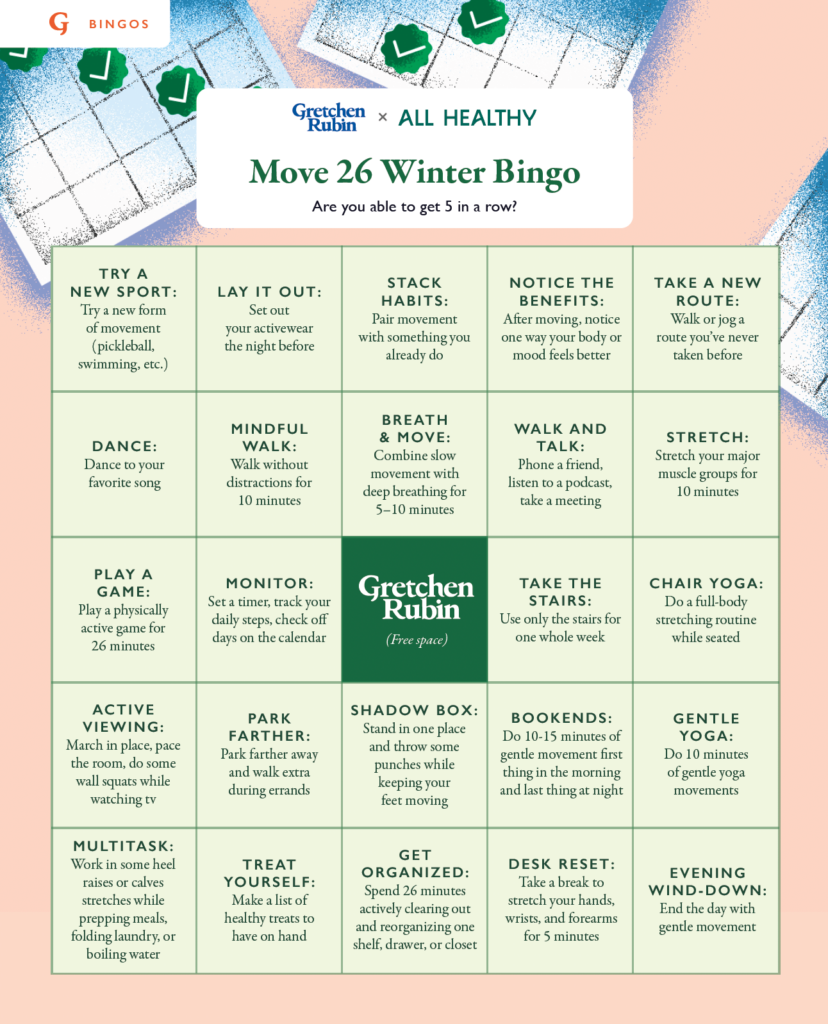
People who joined got a movement-themed card in their inbox they could cross off all year.
By the end of the campaign, All Healthy had picked up around 3,000 new subscribers.
How Sean Does It
1. He picked a partner whose audience already overlapped his. Gretchen Rubin’s readers care about habits, happiness, and small daily wins. That’s a clean match for All Healthy.
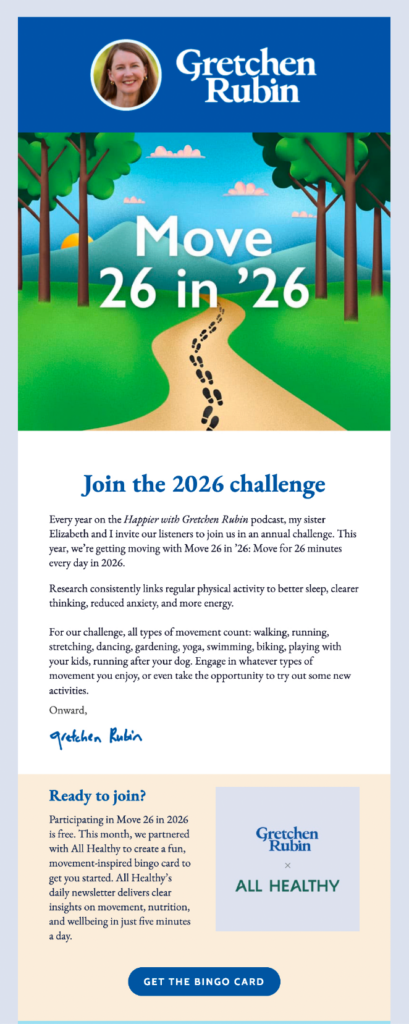
2. He tied the collab to a campaign. Gretchen’s campaign was the “Move 26 in ’26” challenge. So the partnership was super relevant. The signup was framed as “join this challenge,” which gets shared much better in DMs and group chats than “subscribe to this newsletter.”
3. They chose an interesting format, a Bingo card, as the lead magnet. Each entrant got a card with movement prompts they could check off throughout the year. Gretchen had run Bingo cards before and knew the format was a winner.
4. All Healthy sent every signup a custom welcome email. Every new subscriber that came from the partnership got a custom email, referencing Gretchen, the challenge, and the Bingo card, which set clear expectations.
5. He let the newsletters do the work. The people signed up to the campaign got a dedicated section inside an All Healthy edition with the artwork, the explanation, and a “Get Your Free Bingo Card” button. Gretchen ran something similar from her side.
Why It Works
The Bingo card works on a longer timeline than a normal lead magnet. It gives subscribers something to do for an entire year, so the magnet doubles as a retention loop. Every time someone crosses off a square, they remember which newsletter sent it.
Borrowing credibility from Gretchen Rubin changes how new subscribers feel about All Healthy. They’re joining a project that someone they trust is endorsing. That in turn increases the trust in All Healthy and the chance they’ll open the next email.
A dedicated section beats a single link. When a partner gives a full block of their newsletter to your offer, the click-through math looks completely different from a one-line shout.
Both partners’ audiences care about health. The collaboration falls flat if Gretchen’s audience isn’t interested in health. Likewise if Sean’s audience isn’t interested in self-improvement.
Results
- All Healthy added 3,000 new subscribers from the campaign over a few weeks
- New subscribers came through a trusted creator which has downstream effects on open rates and unsubscribes
- The Bingo card is built to be used throughout 2026, so the lead magnet keeps re-engaging the list every time someone crosses off a square
How You Can Implement It
Step 1: Pick a partner whose audience already cares about your topic. The collaboration should feel natural, reader overlap matters more than audience size.
Step 2: Build the collab around an overall campaign with a start and end date. A challenge, a milestone, or a seasonal moment all work.
Step 3: Pick a lead magnet that keeps working after signup, something the subscriber pulls back up over weeks.
Step 4: Set up a dedicated welcome email for campaign signups. Reference the partner, the campaign, and set the tone for what’s coming next. Keep it tied to the thing they signed up for.
Step 5: Push for a dedicated section in the partner’s newsletter. Offer to write the section yourself or make their work easy. A single line or footer link gets buried, so the full section is what moves the numbers.
Step 6: Keep the campaign live in your own newsletter throughout the campaign. A P.S. line, or a recurring section both work. People who missed the first issue should still be able to join.
Tools
- Canva or Figma to design the lead magnet
- Your ESP for the email sequence
- A landing page or in-newsletter section to host the collab/artwork
Creator collaborations work when there’s something real attached to them.
A campaign with a date, a lead magnet that gets reused, and a welcome email that ties it together turns “subscribe to my list” into “join the thing we’re doing this year.”
See you tomorrow,
Chenell
P.S. You can follow Sean on LinkedIn, or subscribe to All Healthy.